

Clinical Dermatology & Venereology
Diagnosis and treatment of conditions of the skin, hair, nails and mucous membranes.
- Session duration
- 20–30 minutes
- Recovery time
- None
- When results become visible
- Depends on the condition and the treatment
- Number of sessions
- Initial visit and follow-ups as needed
- Anaesthesia
- Not required
What it is
Clinical dermatology is the foundation of every correct approach: the diagnosis and treatment of conditions of the skin, hair, nails and mucous membranes, based on examination and history.
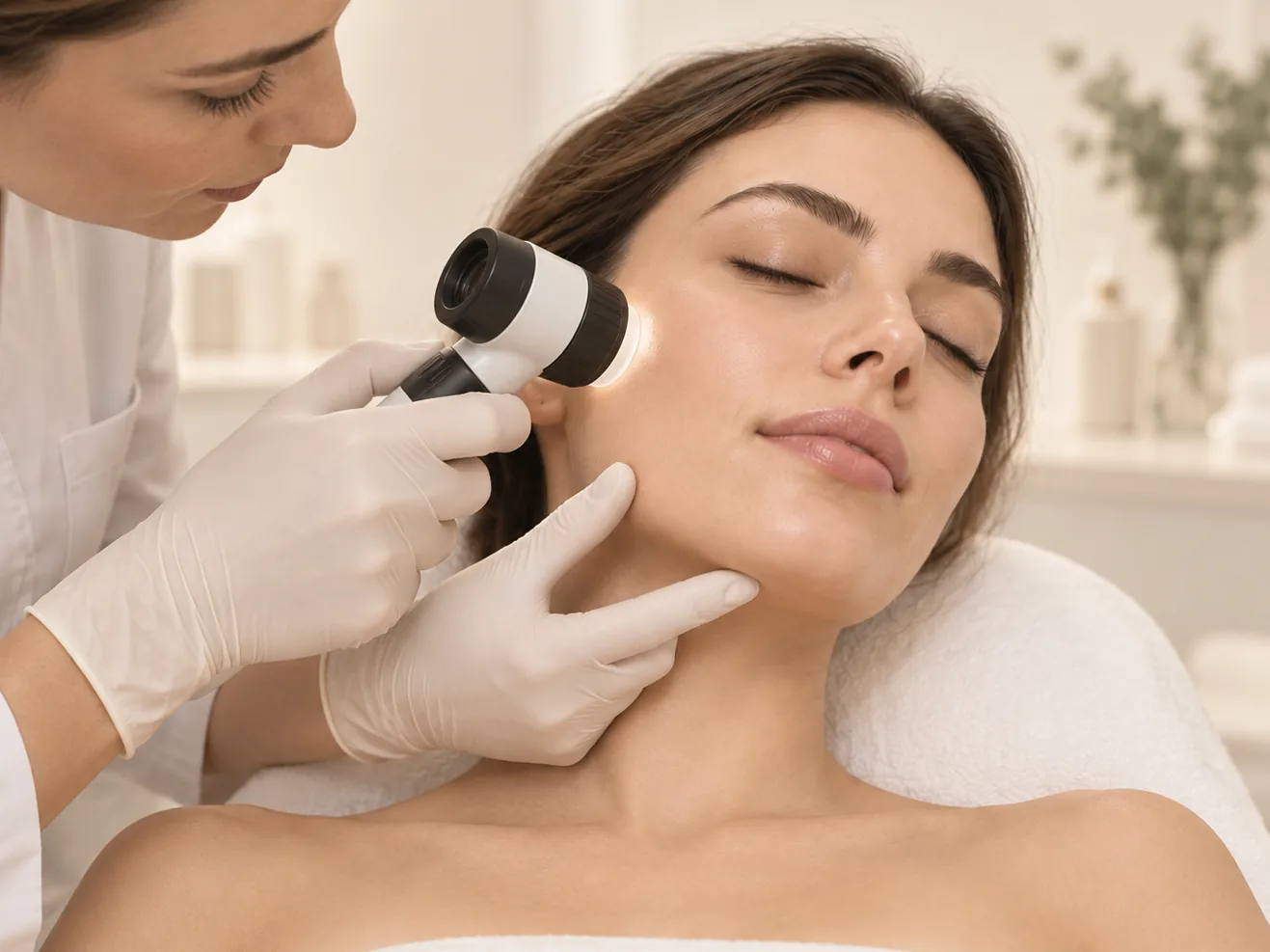
The visit includes history taking, clinical examination and, where needed, dermoscopy, dermatological tests (cultures, mycology, biopsy) or laboratory investigation. The treatment plan follows from this.
At the clinic, no aesthetic treatment is proposed before conditions that would affect the result or safety have been excluded or treated.
Technology / material: Dermoscopy for assessing moles and lesions, digital photographic documentation for follow-up over time.
Who it is for
- Acne, rosacea, seborrhoeic dermatitis
- Eczema, atopic dermatitis, psoriasis, urticaria
- Mole checks and dermoscopic screening
- Hair loss, scalp and nail conditions, fungal infections
- Sexually transmitted infections and related investigation
What it can address
- Inflammatory skin diseases
- Skin infections (bacterial, fungal, viral)
- Benign and suspicious skin lesions
- Scalp and nail conditions
What it aims to improve
- A correct diagnosis before any treatment
- Control of the condition and prevention of relapses
- Mole monitoring and timely investigation of suspicious lesions
How it is performed
- 1
History: symptoms, duration, medication, personal and family history, lifestyle.
- 2
Clinical examination of the skin and, where needed, full-body mole check with a dermatoscope.
- 3
Laboratory investigation where required: culture, mycology, blood tests, skin biopsy.
- 4
Diagnosis and an individual plan: topical or systemic treatment, care instructions, timeline.
- 5
Reassessment to confirm the response and adjust the treatment.
Before, during and after treatment
Before
- Do not apply creams or make-up to the area to be examined.
- Bring your medication, previous test results and photos if the problem comes and goes.
During
- The examination is painless; dermoscopy is performed with the lens in contact with the skin.
- Findings and treatment options are discussed.
After
- Follow the treatment for as long as prescribed, even if the appearance improves quickly.
- Contact us if a side effect appears or there is no response.
- For moles: annual or individually scheduled re-examination.
Why Dr Maria Polykarpou
- Diagnosis first, treatment second — with documentation and reassessment
- Clinical and aesthetic dermatology handled by the same doctor
- Clear information about the treatment, its duration and side effects
- Photographic follow-up for objective comparison over time
Contraindications & important considerations
- There are no contraindications to a dermatological examination.
- Tell the doctor about pregnancy, breastfeeding and medication, as they affect the choice of treatment.
- Every treatment has its own contraindications, which are explained before it begins.
Frequently asked questions
How often should I have my moles checked?
For most adults an annual dermoscopic check is recommended. With multiple or atypical moles, a history of melanoma or heavy sun exposure, checks are more frequent, as the doctor will advise.
When should I worry about a mole?
When it changes in size, shape or colour, has asymmetric or unclear borders, bleeds, scales, or simply looks different from the others. Dermoscopy answers this safely — do not wait.
Is acne treated only with creams?
It depends on the type and severity. There are topical treatments, systemic treatments and complementary procedures; the combination is chosen after examination and adjusted as things progress.
Do I need blood tests?
Not always. They are requested when an underlying cause is suspected (for example in hair loss, urticaria, recurrent infections) or before certain systemic treatments.
Can I have an aesthetic treatment at the same visit?
If the examination reveals nothing that prevents it, some treatments can be done the same day. Otherwise, treating the condition comes first.
Indications, the number of sessions and the protocol are determined individually, after medical assessment. Results vary from person to person.
Related treatments
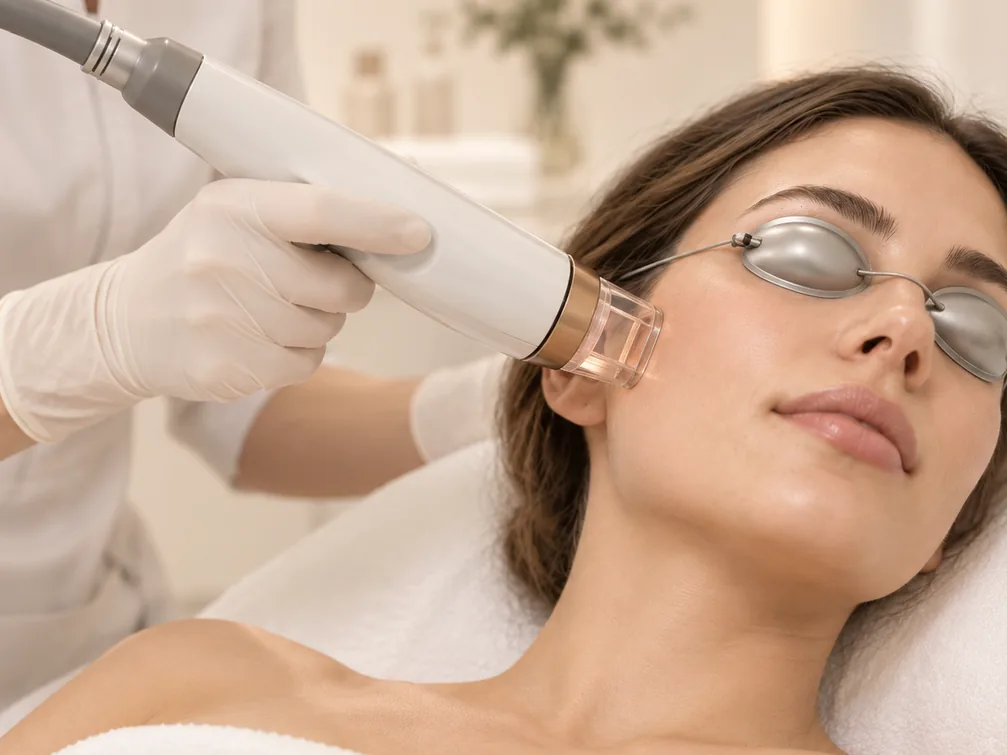
CO₂ Laser
Precise treatment of suitable skin lesions, following dermatological assessment.
View treatment
Medical Facial Cleansing
Deep cleansing with a medical protocol, adapted to your skin type.
View treatment
Chemical Peels
Chemical exfoliation, where medically indicated and after assessment.
View treatmentThe right treatment begins with the right diagnosis.
Your first visit includes a dermatological examination, a discussion of your goals and a personalised plan, with no obligation to proceed with treatment.
Book your visit