
Eyebrow Transplantation
Permanent restoration or enhancement of the eyebrows with your own follicles, using the recipient-site technique and hair-by-hair design.
- Session duration
- Usually in one session
- Recovery time
- Small crusts in the first days; initial healing in about a week
- When results become visible
- Temporary shedding, then gradual new growth; evolves over the following months
- Number of sessions
- Usually 1
- Anaesthesia
- Local
What it is
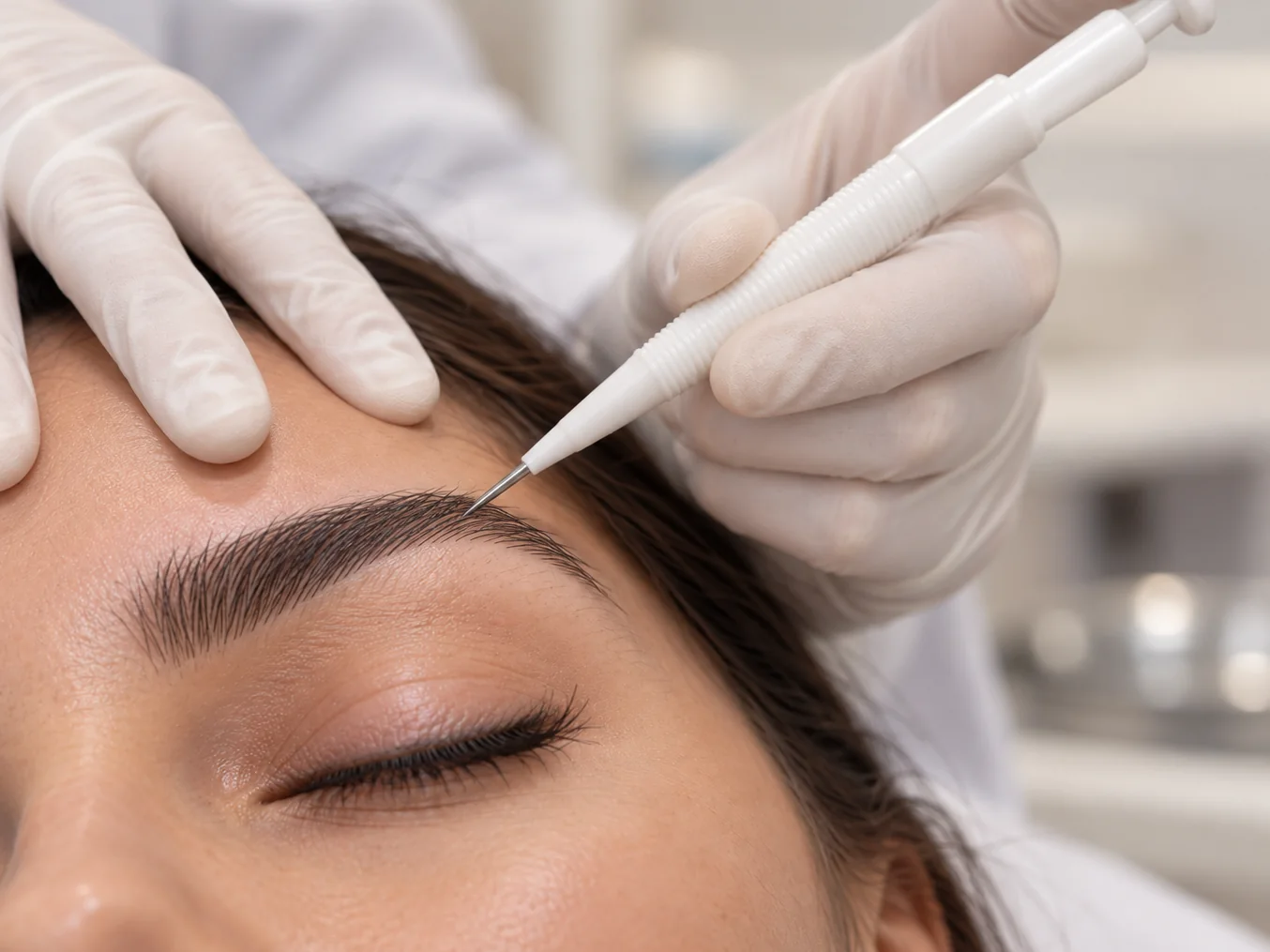
Eyebrow transplantation is a specialised medical procedure that aims to permanently restore or enhance the eyebrows using the patient's own hair follicles.
The procedure places particular emphasis on naturalness, the correct direction of hair growth and the harmony of the eyebrows with the features of the face.
Eyebrow transplantation requires a different approach from hair transplantation: in the brow area, even small variations in the angle or direction of a single hair can affect the overall result. This is why design and implantation are carried out hair by hair, with particular attention to detail.
Technology / material: Recipient-site technique: very small sites are created with precision in the brow area, into which the selected — preferably single-hair — follicular grafts from the donor area are placed one by one.
Who it is for
- People with sparse or thin eyebrows
- Hair loss due to excessive plucking in the past
- Scars or injuries in the eyebrow area
- Those who want more density or an improved shape of their eyebrows
- The suitability of each candidate is assessed individually at the medical examination.
What it can address
- Sparse or thin eyebrows
- Gaps and asymmetries
- Missing tail or arch
- Scars within the brow
What it aims to improve
- Permanent restoration or enhancement of sparse, thin eyebrows
- A brow that looks natural and suits the specific face — not simply more hairs
- Correct direction, density and shape in every part of the brow
How it is performed
- 1
Individual design: detailed planning of the eyebrow shape based on the anatomical features and proportions of the face, the existing natural brow, the desired density and your personal style and wishes.
- 2
Graft selection: suitable follicular grafts are carefully selected from the donor area, with particular importance given to single-hair grafts, so that the result is fine and natural and the look of an overly "heavy" brow is avoided.
- 3
Creating the recipient sites: very small sites are created with precision in the brow area. This stage determines the angle, direction and distribution of the new hairs.
- 4
Zone-by-zone planning: in natural eyebrows the direction of the hairs changes from the head to the body and the tail of the brow. Each zone is designed separately, so that the new hairs follow the natural architecture of the brow as closely as possible.
- 5
Placement: after preparation, the grafts are placed one by one into the sites already created.
- 6
Care instructions and a scheduled follow-up visit.
Before, during and after treatment
Before
- Tell the doctor about medicines, especially blood thinners, and any conditions.
- Do not pluck the eyebrows for 2–3 weeks beforehand, so their natural growth pattern can be assessed.
- Avoid alcohol and smoking for a few days.
During
- With local anaesthesia you feel no pain; creating the sites and placing the grafts require stillness and time.
- The design is checked with you in the mirror before implantation begins.
After
- Do not touch or wet the eyebrows for the first 48 hours; then wash as we show you.
- Avoid sun, exercise, sauna and make-up on the area for 10–14 days.
- After the initial healing, the transplanted hairs usually shed temporarily and then gradually begin to grow again.
- Because the hairs keep characteristics of the donor area, they grow longer than natural eyebrow hairs and need periodic trimming and grooming.
Why Dr Maria Polykarpou
- Individual design based on the anatomy and proportions of the face, the existing brow and your personal style
- Recipient-site technique: the angle, direction and distribution of every hair are set by the doctor, zone by zone
- Careful selection of single-hair grafts for a fine, natural result
- Honest information about what is achievable and what aftercare involves
Contraindications & important considerations
- Active alopecia areata or other autoimmune/scarring alopecia in an active phase
- Untreated trichotillomania
- Active inflammation or infection in the area
- Clotting disorders, uncontrolled chronic conditions, immunosuppression
- Unrealistic expectations or body dysmorphic disorder
- Final suitability is assessed by the doctor at the consultation.
Frequently asked questions
What is the recipient-site technique?
Very small recipient sites are created with precision in the brow area and the selected follicles are then placed into them. Creating the sites determines the angle, direction and distribution of the new hairs — which is why it is one of the most important stages of the procedure.
Where do the grafts come from?
From the patient's own donor area. Suitable follicular grafts are carefully selected, preferably single-hair units, so that the result is fine and natural.
Why does the direction of each hair matter?
In natural eyebrows the hairs do not all grow in the same direction: their direction changes from the head to the body and the tail of the brow. Each zone is designed separately so that the new hairs follow the natural architecture of the brow.
Does it hurt?
The procedure is performed under local anaesthesia and is not painful. Mild swelling or tenderness may occur for a few days.
When will I see the result?
After the initial healing period the transplanted hairs usually shed temporarily and then gradually begin to grow again. The result evolves progressively over the following months.
Will it look natural?
The goal is not simply to add more hairs, but a brow that looks natural and suits the specific face. Design, the selection of single-hair grafts and above all the correct angle and direction of each hair are the key elements.
Does it need aftercare?
Yes. Because the transplanted hairs keep characteristics of the donor area, they grow longer than natural eyebrow hairs and need periodic trimming and grooming.
Is it permanent?
The transplanted follicles come from the patient and remain. Final density can vary from person to person; suitability and expectations are discussed at the medical examination.
Indications, the number of sessions and the protocol are determined individually, after medical assessment. Results vary from person to person.

The right treatment begins with the right diagnosis.
Your first visit includes a dermatological examination, a discussion of your goals and a personalised plan, with no obligation to proceed with treatment.
Book your visit