

CO₂ Laser
Precise treatment of suitable skin lesions, following dermatological assessment.
- Session duration
- 5–30 minutes, depending on the number of lesions
- Recovery time
- A crust for 5–10 days; redness that fades over weeks
- When results become visible
- Immediately after healing
- Number of sessions
- Usually 1 session per lesion
- Anaesthesia
- Local
What it is
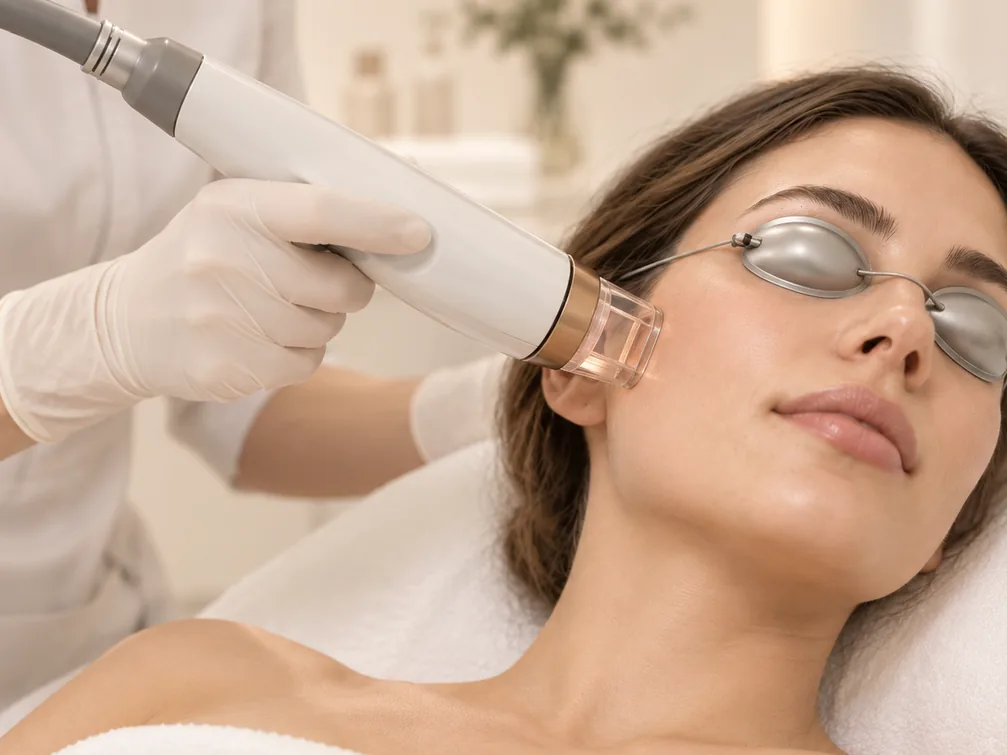
The CO2 laser is an ablative laser: its energy is absorbed by the water in cells and removes the unwanted lesion precisely, layer by layer, with minimal impact on the surrounding skin.
It is used for benign lesions that have first been assessed dermatologically — skin tags, papillomas, warts, seborrhoeic keratoses, xanthelasma and certain moles.
The critical step is the assessment beforehand: every lesion is examined (including with dermoscopy) so that nothing requiring histology is removed with a laser.
Technology / material: Medical 10,600 nm CO2 laser, in ablative mode for targeted lesion removal and in fractional mode for resurfacing.
Who it is for
- Skin tags and papillomas
- Warts and viral lesions
- Seborrhoeic keratoses and xanthelasma
- Selected moles, after dermoscopic assessment
What it can address
- Benign raised lesions
- Lesions in difficult areas (eyelids, neck, armpits)
- Keratoses
- Small scars and texture irregularities (fractional mode)
What it aims to improve
- Precise removal of a benign lesion with minimal trauma
- A good aesthetic outcome in the area
- A low chance of recurrence in properly selected lesions
How it is performed
- 1
Dermatological examination and dermoscopy of every lesion; if anything is suspicious, a laser is not used — the lesion is excised for histology.
- 2
Cleansing of the area and local anaesthesia with cream or injection, depending on the lesion.
- 3
Targeted ablation of the lesion with the CO2 laser, with depth control.
- 4
Topical antiseptic care and a dressing where needed.
- 5
Healing instructions and a follow-up visit to check the result.
Before, during and after treatment
Before
- Tell the doctor about any history of scarring or cold sores and about your medication.
- Avoid sun exposure and self-tanners for 2 weeks beforehand.
During
- With local anaesthesia the procedure is painless; you may notice warmth and an odour.
- Duration depends on the number of lesions.
After
- Clean and moisturise the area as shown; do not pick the crust.
- High-factor sunscreen for at least 2 months, to avoid pigment changes.
- Avoid pools, sea and sauna until fully healed.
Why Dr Maria Polykarpou
- Every lesion is checked with dermoscopy first — anything needing histology is not lasered
- Parameters set per lesion and per area, by a dermatologist
- Emphasis on healing: clear instructions and a follow-up visit
- Can be combined with other treatments in the same plan
Contraindications & important considerations
- A suspicious lesion requiring histology — this is excised surgically, not lasered
- Active infection or cold sores in the area
- A history of hypertrophic or keloid scarring (caution required)
- Recent isotretinoin use, depending on the interval
- Clotting disorders, uncontrolled diabetes, immunosuppression
- Final assessment is made by the doctor at the visit.
Frequently asked questions
Will there be a scar?
In most benign, superficial lesions the site heals without a visible scar. In deeper lesions or with a history of keloids the risk is higher and is discussed beforehand.
Does it hurt?
The treatment is performed under local anaesthesia, so it is not painful. Afterwards there may be mild stinging for a few hours.
Can any mole be removed with a laser?
No. If dermoscopy shows anything suspicious, the lesion must be excised surgically so it can be sent for histology. The laser is used only in clearly benign cases.
When can I wear make-up?
After the crust has fallen off and with the doctor’s approval, usually in 7–10 days.
Can the lesion come back?
In properly selected and fully removed lesions this is unlikely. Some viral lesions (warts) can recur and may need a repeat treatment.
Indications, the number of sessions and the protocol are determined individually, after medical assessment. Results vary from person to person.
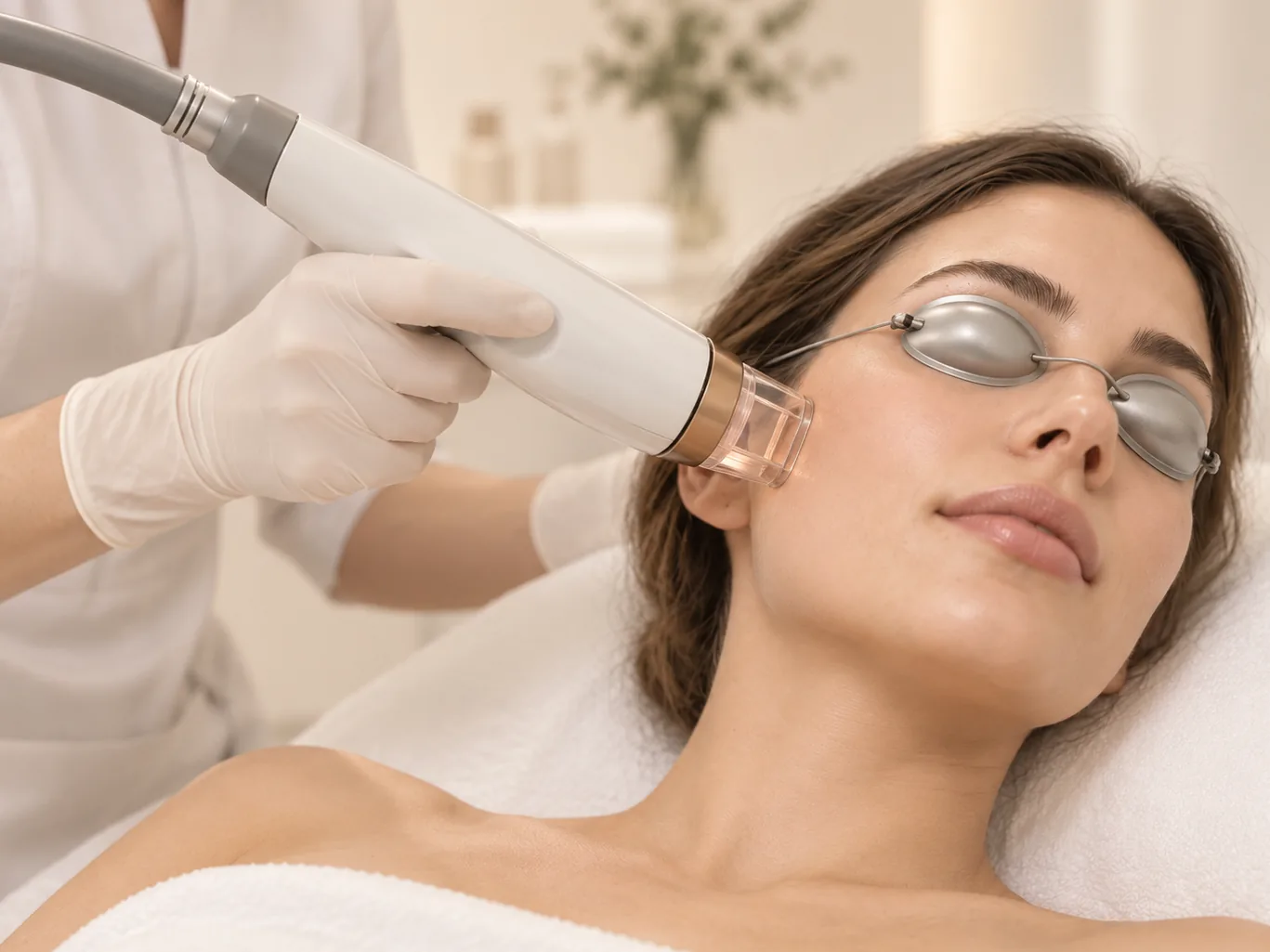
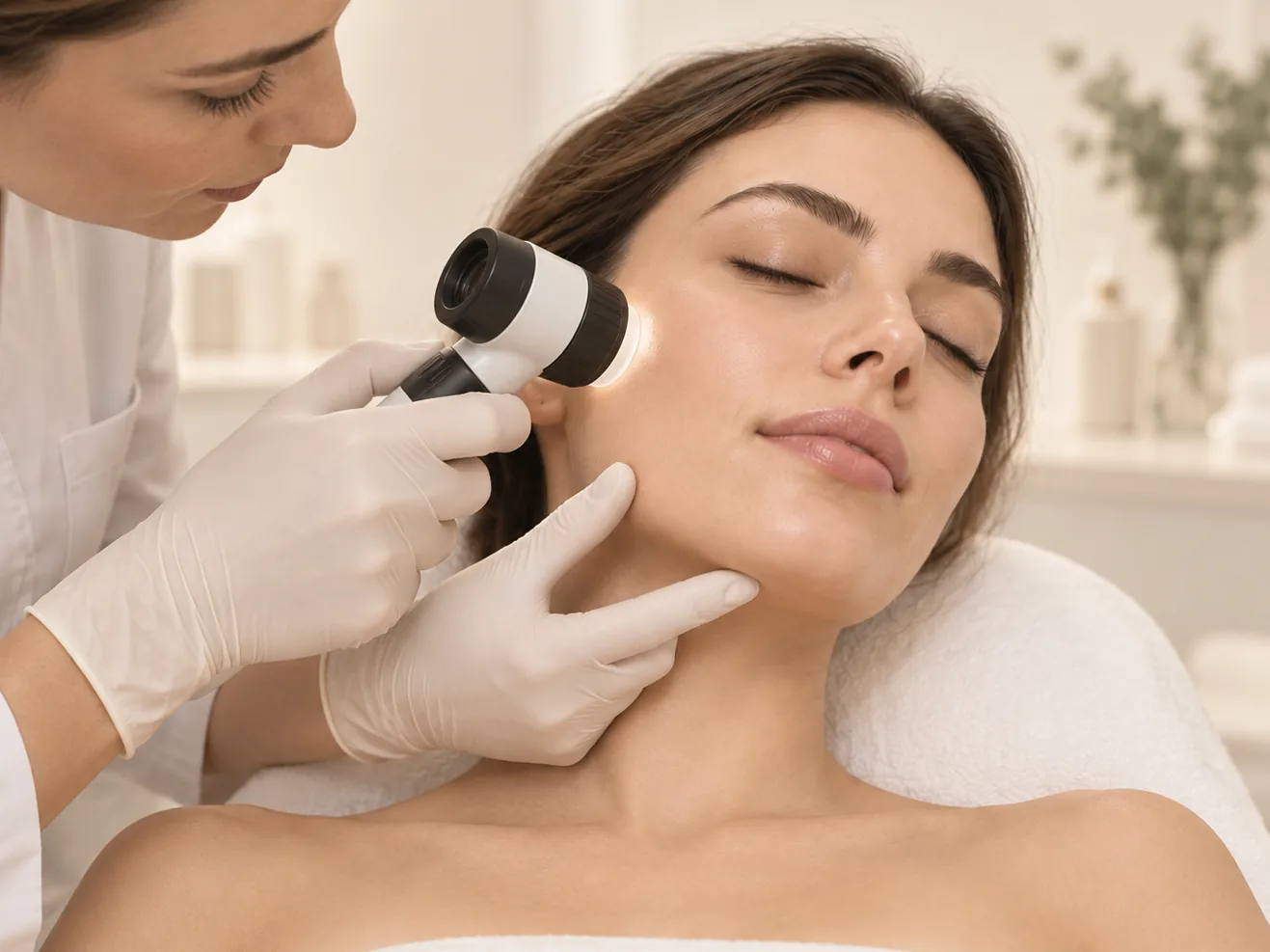
The right treatment begins with the right diagnosis.
Your first visit includes a dermatological examination, a discussion of your goals and a personalised plan, with no obligation to proceed with treatment.
Book your visit