

PDRN / Polynucleotides
Polynucleotides (salmon DNA) for skin regeneration and quality.

- Session duration
- 20–30 minutes
- Recovery time
- Redness and small bumps for 24–48 hours
- When results become visible
- Gradually from week 2–3
- Number of sessions
- 3–4 sessions every 2–3 weeks
- Anaesthesia
- Topical anaesthetic cream
What it is
Polynucleotides (PDRN) are DNA fragments of biological origin used as an injectable regenerative treatment. They target skin quality: elasticity, hydration and density.
They are among the treatments well tolerated in the delicate area around the eyes, where skin hydration and density make a visible difference.
They add no volume and do not change your features; they improve the substrate. They are recommended as a course of sessions, often as preparation for or a complement to other treatments.
Technology / material: Approved polynucleotide products for intradermal delivery, in different concentrations per area (face, eye area, neck).
Who it is for
- Thin skin with reduced elasticity
- The area around the eyes (fine lines, dullness)
- Neck and décolletage
- Skin with signs of photoageing
What it can address
- Reduced elasticity
- Fine lines and dullness
- Dehydration
- Uneven texture
What it aims to improve
- Improved skin elasticity and density
- Hydration and glow, without changing volume
- A better substrate before or after other treatments
How it is performed
- 1
Assessment of skin quality and choice of product per area.
- 2
Anaesthetic cream for 20–30 minutes and antisepsis.
- 3
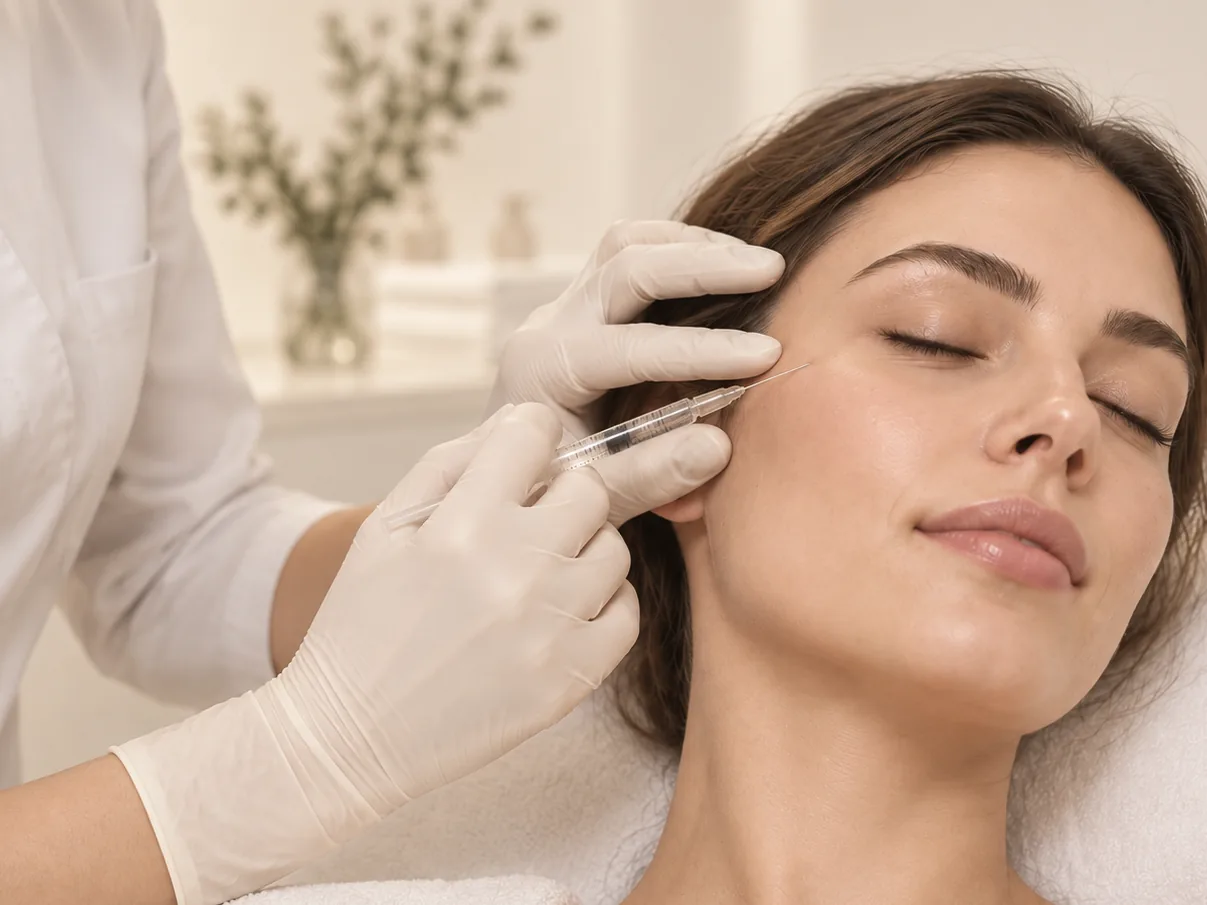
Intradermal micro-injections in an even grid.
- 4
Cooling and soothing care.
- 5
A course of 3–4 sessions every 2–3 weeks, then maintenance.
Before, during and after treatment
Before
- Avoid blood thinners and alcohol for 2 days beforehand, if your own doctor allows.
- Come without make-up.
During
- A sensation of small pinpricks, tolerable with the anaesthetic cream.
After
- No make-up for 12 hours; moisturiser and sunscreen.
- Avoid the gym, sauna and sun for 48 hours.
- The small bumps are absorbed on their own.
Why Dr Maria Polykarpou
- Product and grid density chosen per area
- Emphasis on skin quality, not volume
- Combined with skinboosters, mesotherapy or laser in a single plan
- A gradual, documented approach with reassessment
Contraindications & important considerations
- Pregnancy and breastfeeding
- Active infection or inflammation in the area
- Known allergy to components of the product (including fish proteins, depending on the product)
- Active autoimmune disease
- Clotting disorders or anticoagulant therapy (requires discussion)
- Final assessment is made by the doctor at the visit.
Frequently asked questions
Do they add volume?
No. They target skin quality and elasticity, without changing volume or your features.
Are they suitable around the eyes?
Yes — this is one of the most common indications, thanks to good tolerance in thin skin.
How long does the result last?
After the course, usually 6–9 months, with maintenance once or twice a year.
Can they be combined with hyaluronic acid?
Yes, in separate sessions or at different levels, within a single plan.
Any restriction if I am allergic to fish?
Some products are derived from fish proteins. Tell the doctor about allergies so a suitable product or an alternative treatment can be chosen.
Indications, the number of sessions and the protocol are determined individually, after medical assessment. Results vary from person to person.


The right treatment begins with the right diagnosis.
Your first visit includes a dermatological examination, a discussion of your goals and a personalised plan, with no obligation to proceed with treatment.
Book your visit